The Challenge
Hydro One ran an annual community investment fund opening applications for a 6-week window. The challenge: design a landing page that clearly explains the fund, eligibility criteria, and the application process to drive grant applications.
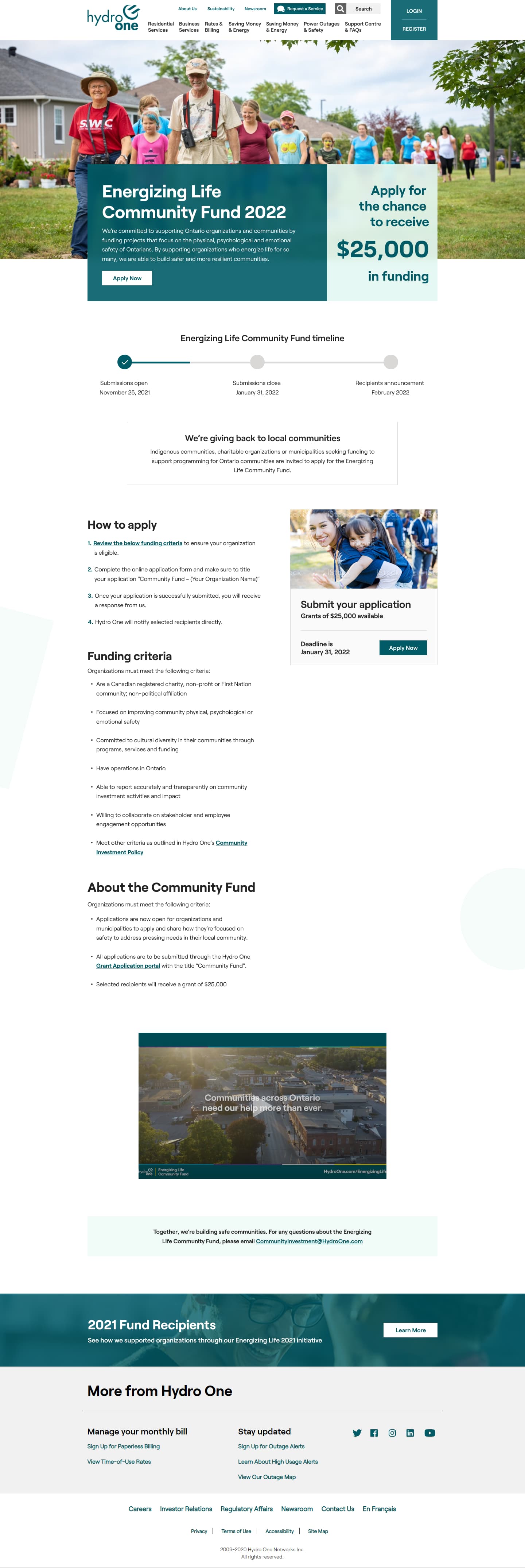
When I took over this campaign page in 2022, I redesigned it to prioritize clarity and conversion. I shifted from narrative to a scannable card-based layout.
- Complex information hierarchy made it hard to scan
- Unclear path to the application
- Long-form narratives didn't support quick decision-making
The Design Approach
2022: Complete Redesign
When I took over the campaign page in 2022, I redesigned it with a focus on clarity and conversion:
User Flow
User sees animation highlighting funding
User can see where in the timeline the current fund is at
User reads eligibility criteria while application box scrolls with them
User clicks apply now
2022 Design Elements
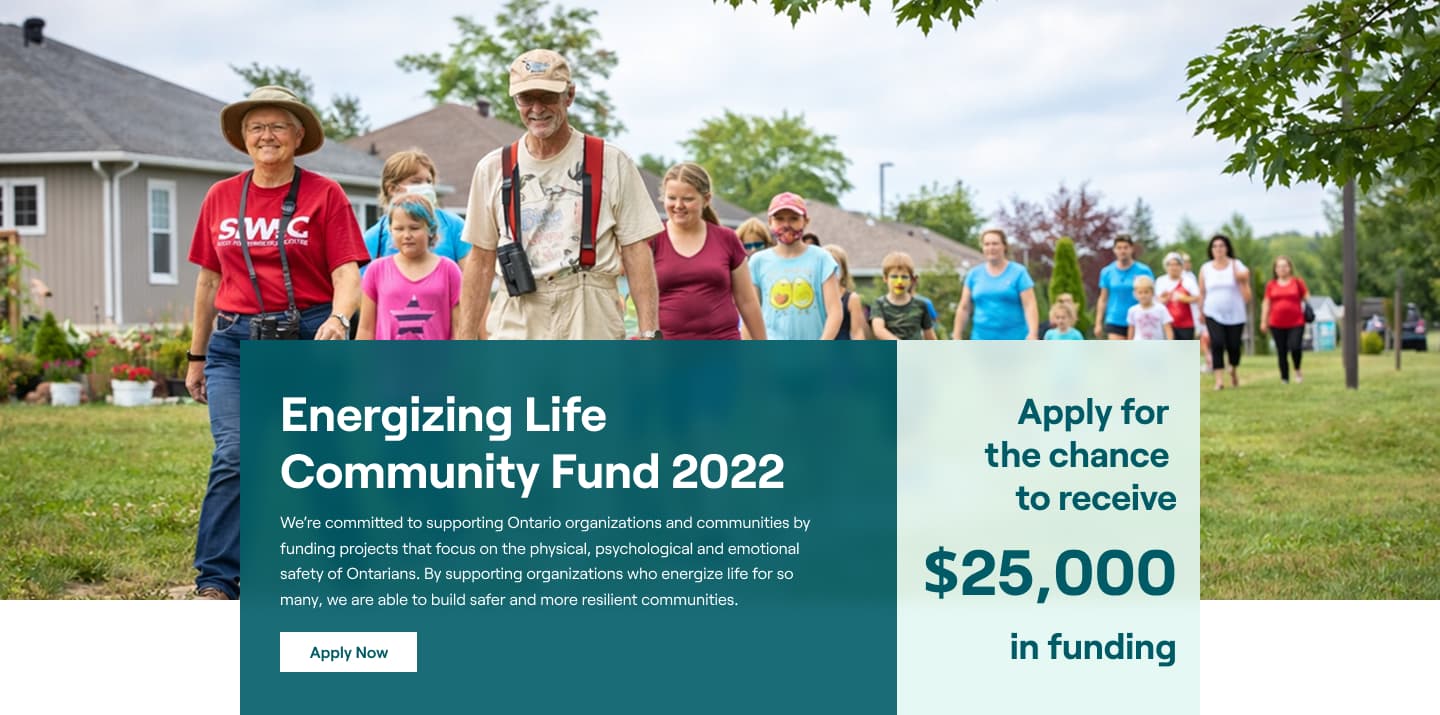

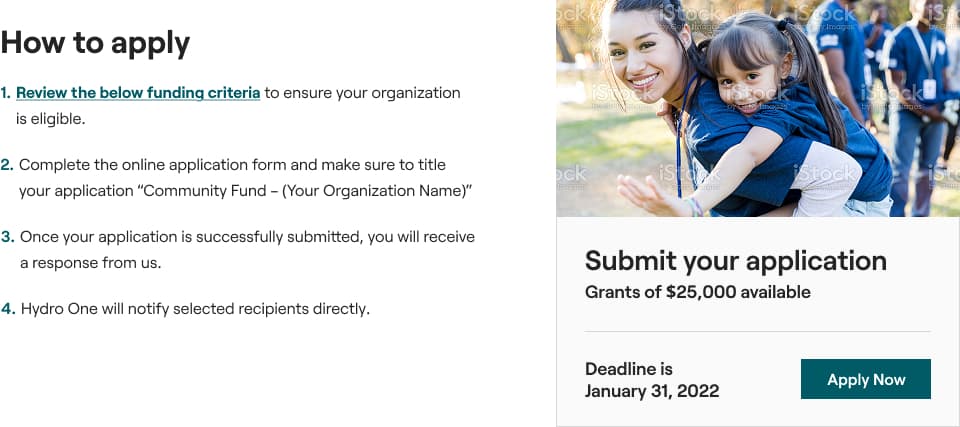
2022 Results:
The redesign established a strong baseline. Applications increased significantly by 4 fold compared to 2021. Traffic also increased proportionally, suggesting both improved design and stronger marketing that year contributed to results.
2023 - 2025: Testing & Refinement
Over the following years, I tested variations on the design. In 2023, I had successfully implemented Microsoft Clarity, which allowed me to experiment with component layout and adjusting visual details, all while maintaining the core information architecture.
2023: Minimal Marketing Year
Due to other circumstances, marketing efforts were reduced that year. However, the design improvements and user experience enhancements continued to drive engagement and application submissions.
Design changes
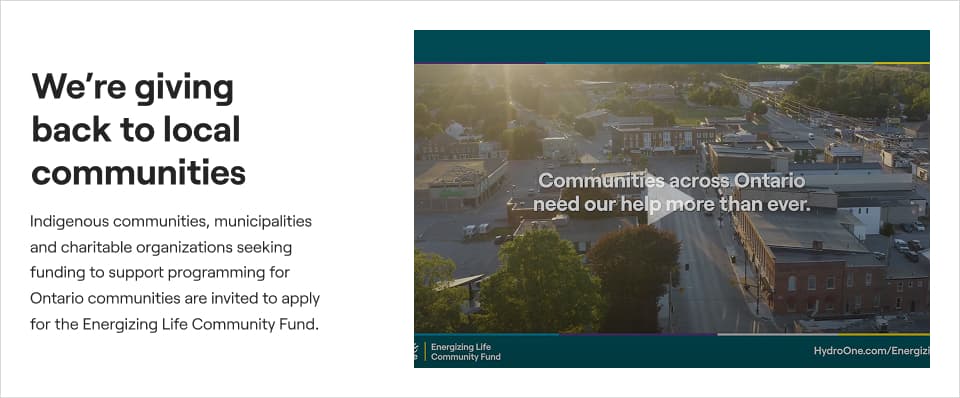
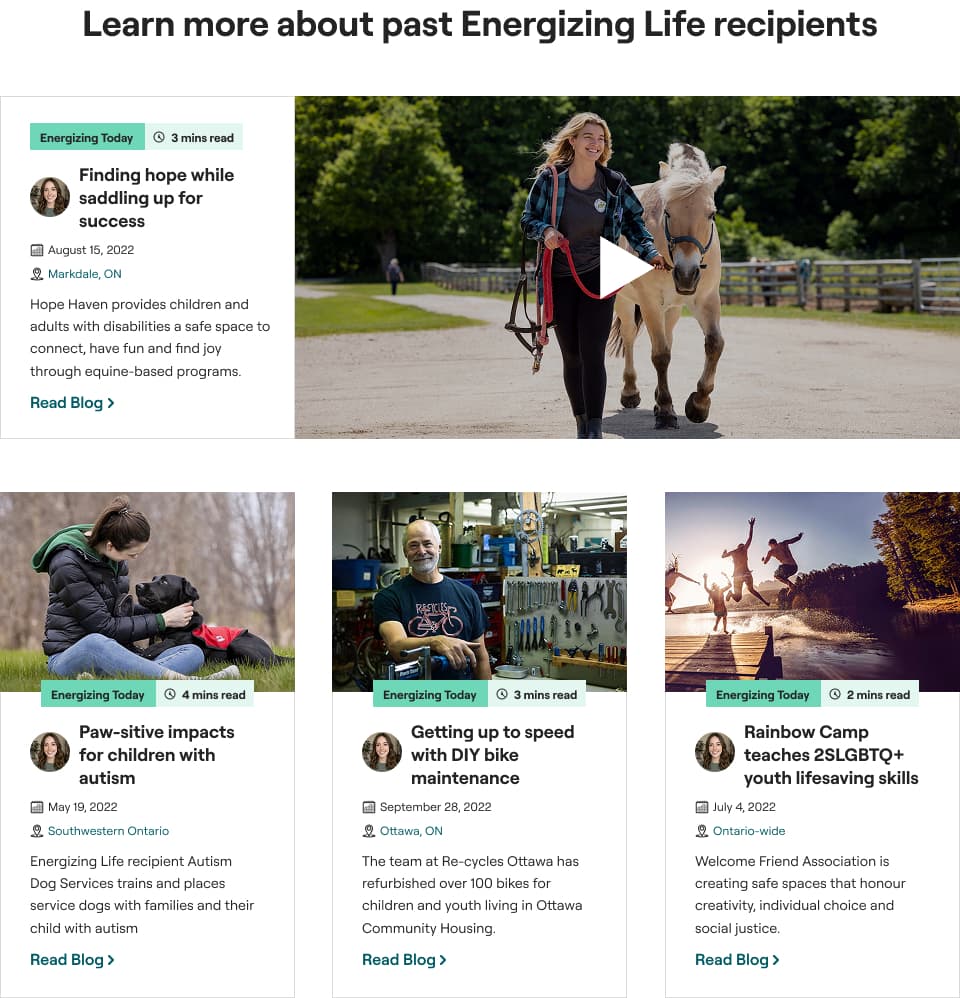
Applications dropped, but the page held up well with lower traffic. The design clearly communicated information to those who found it—proving the baseline design was solid.
Reviewing the user recordings showed that users were engaged with the content and found it easy to navigate.
- Lower application volume due to minimal promotion
- ~47% bounce rate
- ~30% repeat visitors
- Key learning: The design works independent of marketing spend
2024: Full Marketing Campaign
Design Changes
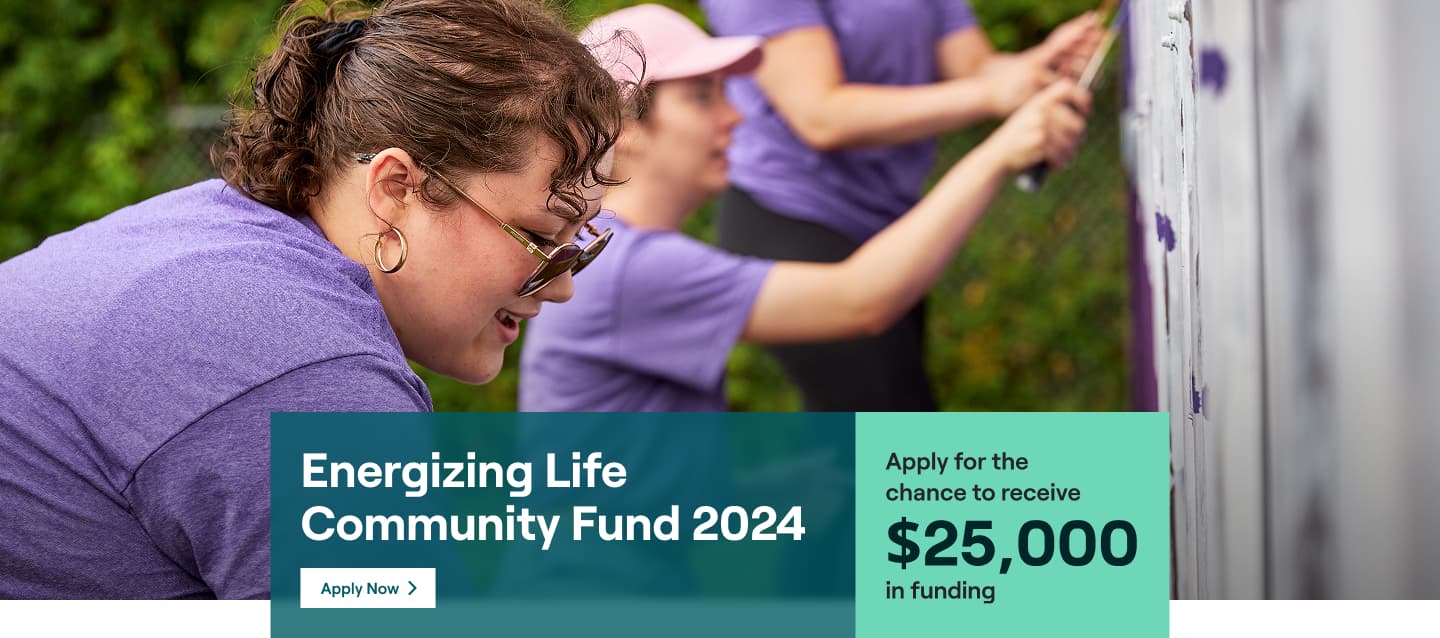
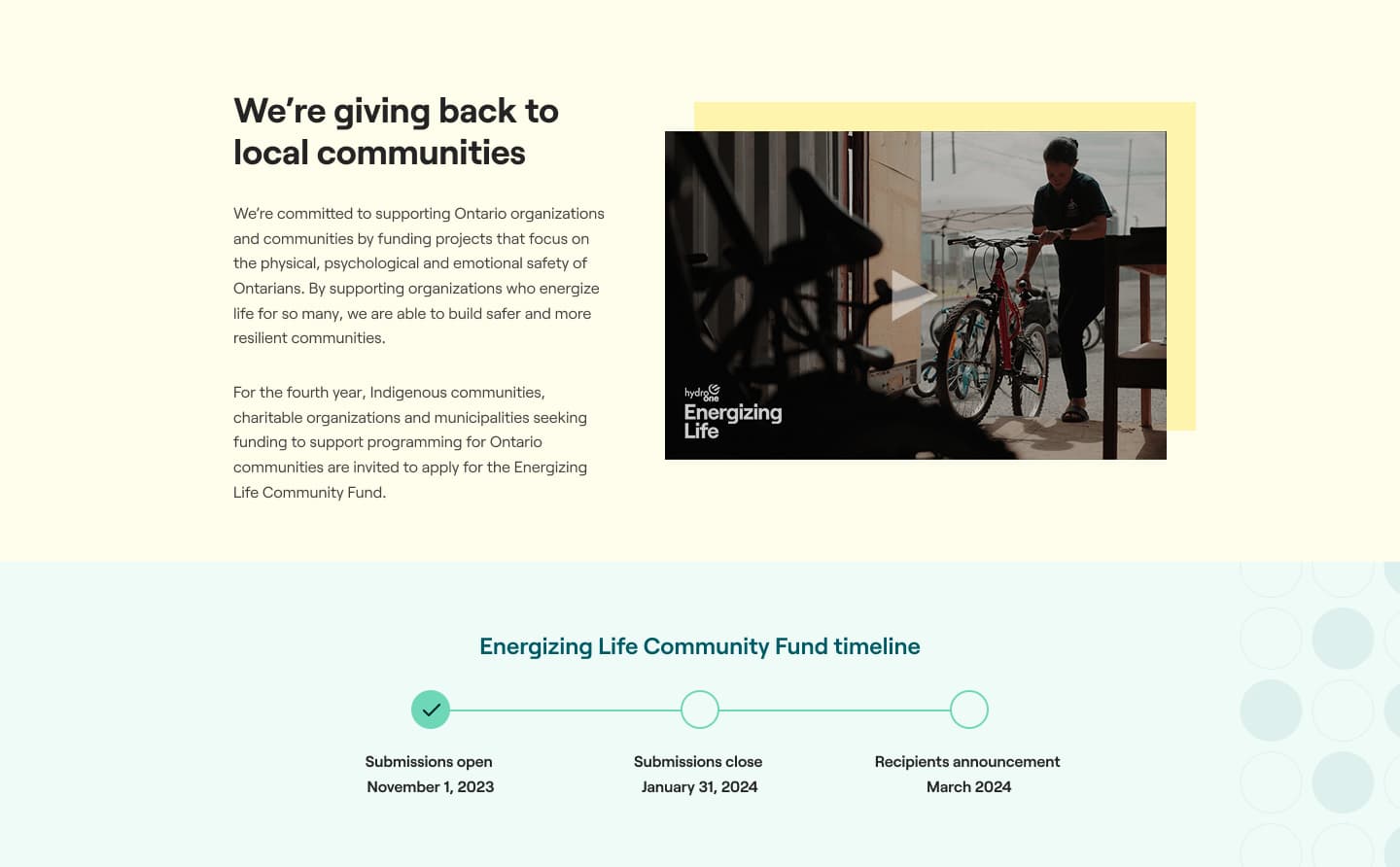
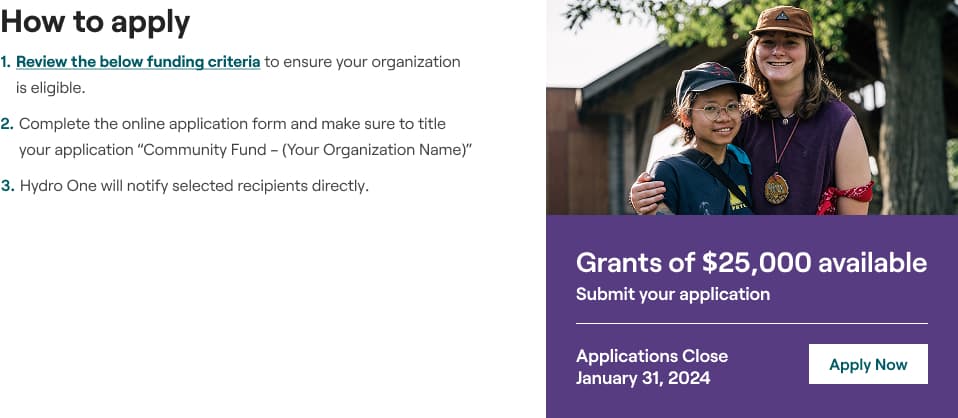
When advertising returned to normal, results improved significantly:
- Substantial 60% increase in applications compared to 2022 baseline, and a 6.4x increase compared to 2021 baseline.
- Improved bounce rate (~12 points lower than 2023)
- Strong repeat visitor rate (~50%)
- Average session duration notably shorter than 2022
- Critical insight: Users were applying faster while applications increased. Shorter engagement time + higher conversions = clearer conversion path
2025: Final Simplification
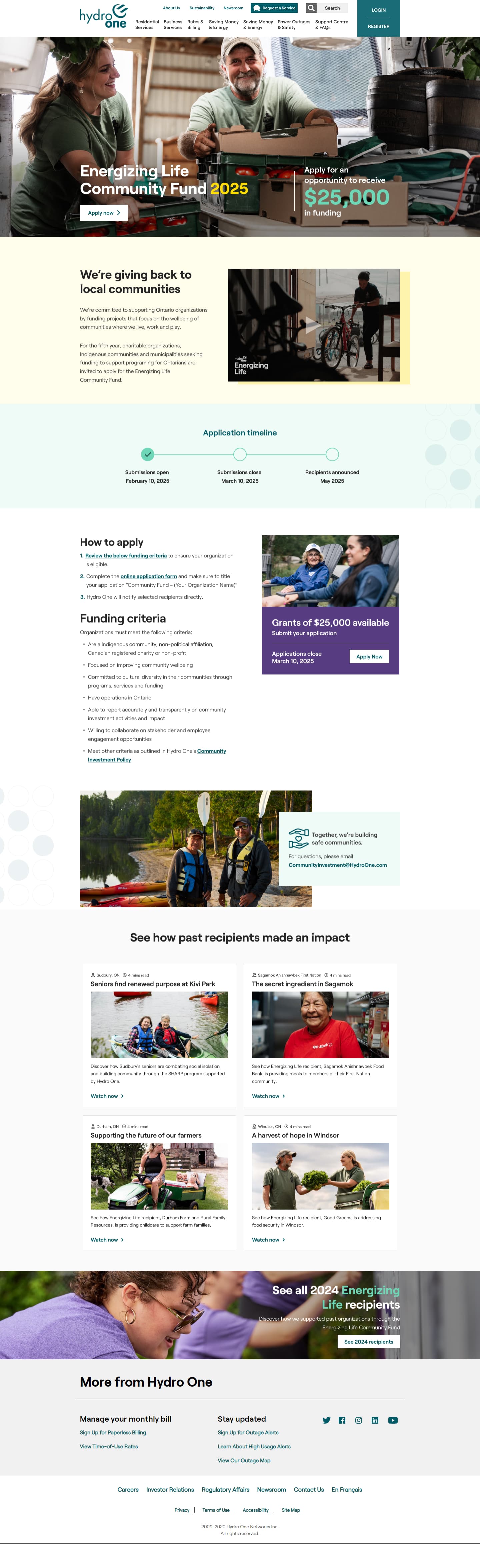
Based on learnings from previous cycles, I simplified the design further, removing experimental flourishes and doubling down on clarity. For this last round, there was no advertising. The fund in 2025 was only advertised through a direct mail campaign and boosted social media posts.
Design Changes
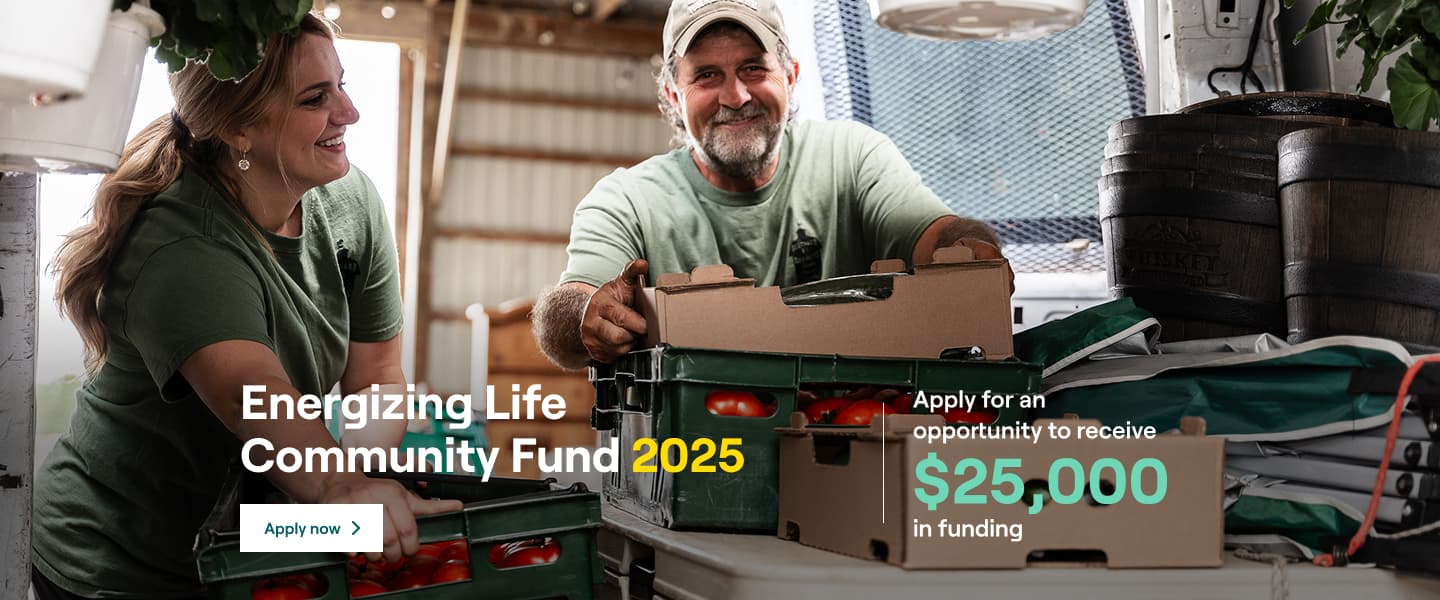
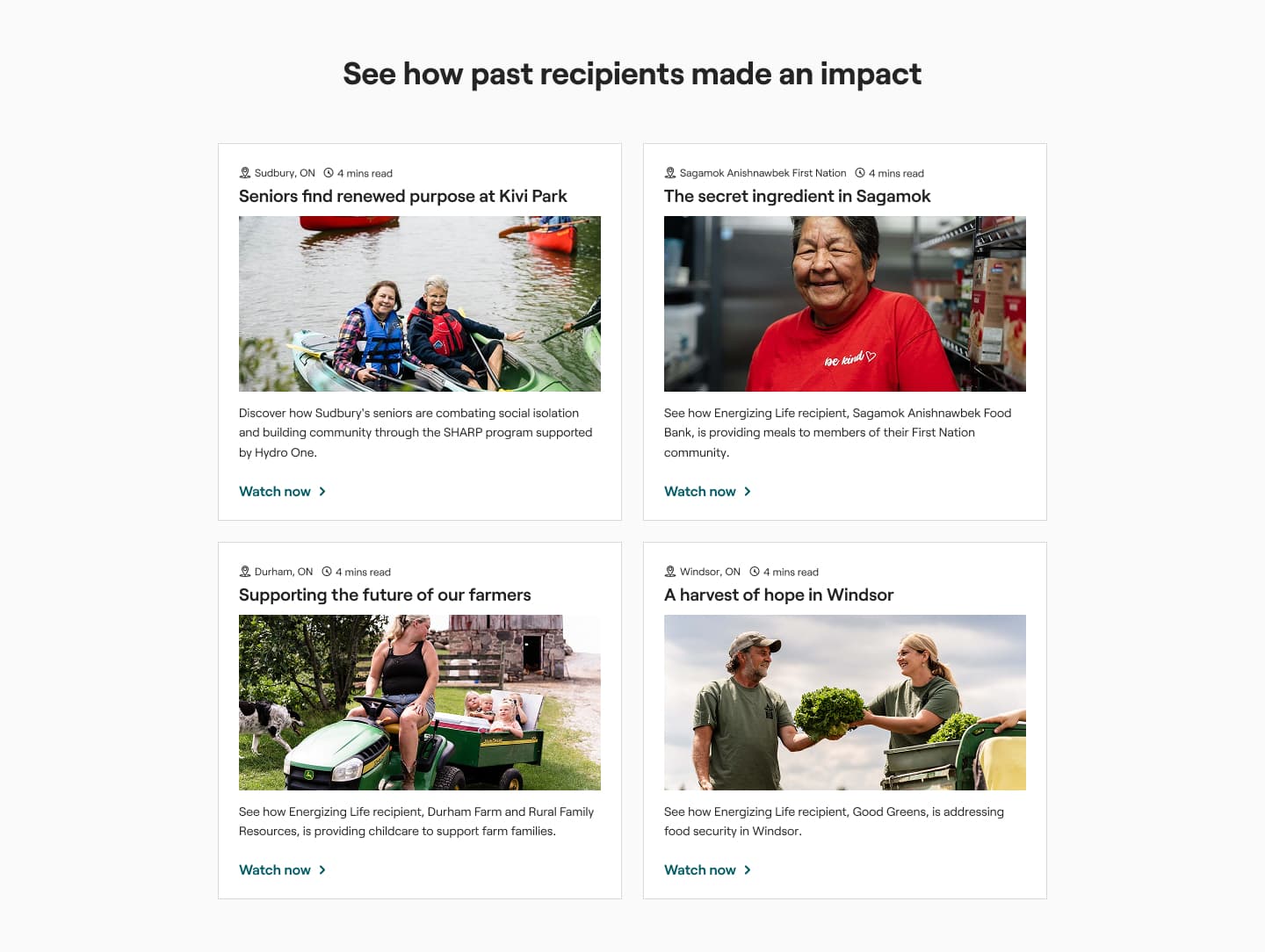
Design Changes:
- Removed complex visual elements
- Focused on card-based grid with consistent spacing
- Streamlined copy and information hierarchy
- Maintained accessibility (WCAG 2.1 AA)
2025 Results (No Paid Advertising):
This was the strongest validation of the design. With zero paid ads (just organic search, email, and social posts), the page generated meaningful applications with strong engagement metrics:
- Meaningful application volume despite zero paid promotion (still double the initial2021 amount)
- ~56% engagement rate (strong for owned-channel traffic)
- ~44% bounce rate (acceptable for organic audience)
- ~3m 13s average session duration (users reading and deciding)
- ~20% of traffic from organic search (SEO success)
- ~3,000 clicks to the application
Key insight: The design still converted users effectively through owned channels alone, without relying on paid promotion. This proves design quality matters independent of media spend.
What This Taught Me
Simplicity to Complexity
The original page tried to tell a story. The redesigned page enables users to make decisions. That's more effective.
Data Tells the Story
The shift from "more time on page = success" to "less time but more conversions = success" showed I was solving the right problem—making application faster and easier.
Iteration Over Redesign
Rather than annual overhauls, small refinements based on user behavior proved more effective. Testing different layouts helped identify what actually worked.
Technical Execution
Throughout all iterations:
- Built in HTML/CSS/JavaScript (no CMS limitations)
- Responsive design across mobile and desktop
- Performance optimized (lazy loading, image compression)
- Accessible (WCAG 2.1 AA compliance, keyboard nav, screen reader support)
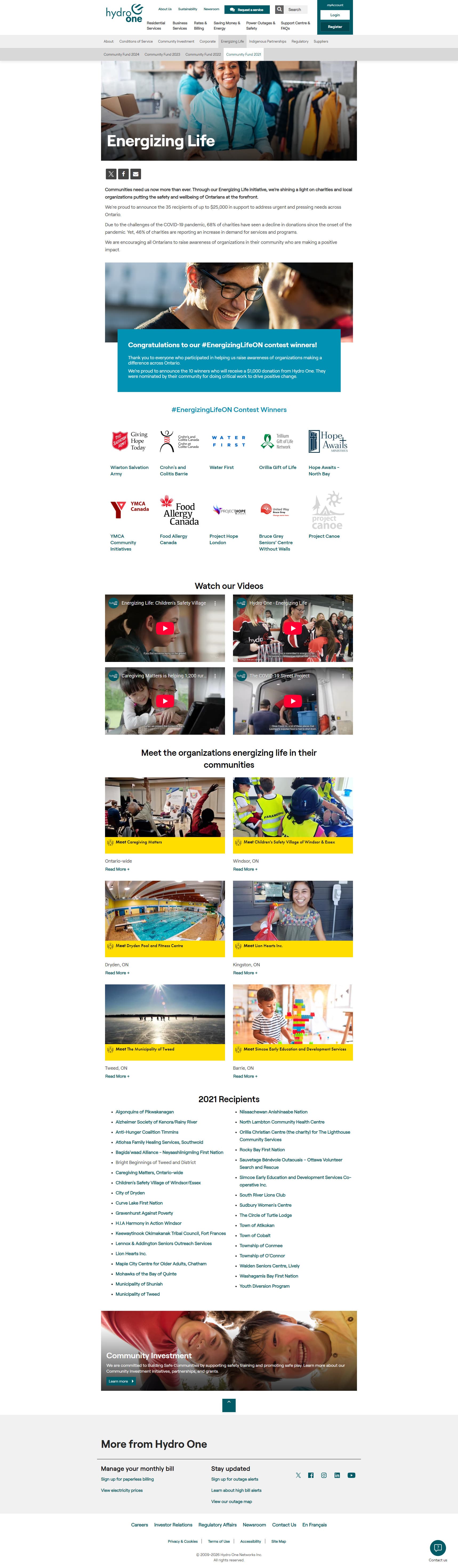
- Three page states: Open Registration → Closed → Winners Announced
The Impact
Over four campaign cycles (2022-2025), the page evolved from a narrative-focused experience to a conversion-focused tool. The final 2025 campaign (run with zero paid advertising) proved the design worked.
User Outcome: Users spend less time reading and more time applying. Exactly what the page should do.